
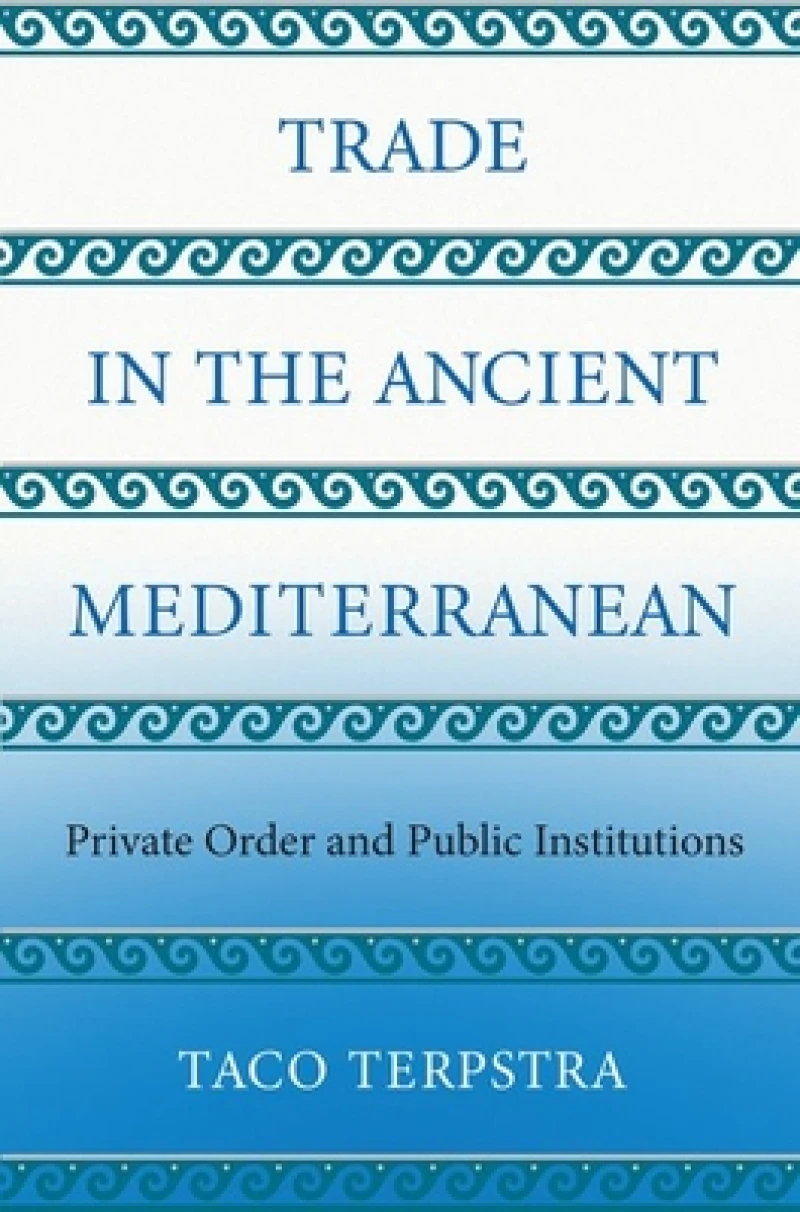
Trade in the Ancient Mediterranean : Private Order and Public Institutions
Book Details
AI Summary
Delivery Location
Delivery fee: Select location
How ancient Mediterranean trade thrived through state institutions
From around 700 BCE until the first centuries CE, the Mediterranean enjoyed steady economic growth through trade, reaching a level not to be regained until the early modern era. This process of growth coincided with a process of state formation, culminating in the largest state the ancient Mediterranean would ever know, the Roman Empire. Subsequent economic decline coincided with state disintegration. How are the two processes related?
In Trade in the Ancient Mediterranean, Taco Terpstra investigates how the organizational structure of trade benefited from state institutions. Although enforcement typically depended on private actors, traders could utilize a public infrastructure, which included not only courts and legal frameworks but also socially cohesive ideologies. Terpstra details how business practices emerged that were based on private order, yet took advantage of public institutions.
Focusing on the activity of both private and public economic actors—from Greek city councilors and Ptolemaic officials to long-distance traders and Roman magistrates and financiers—Terpstra illuminates the complex relationship between economic development and state structures in the ancient Mediterranean.
Get Trade in the Ancient Mediterranean by at the best price and quality guaranteed only at Werezi Africa's largest book ecommerce store. The book was published by Princeton University Press and it has pages.
Discover books you might love based on this title.
More in This Genre
A Short History of Economic Progress
Ksh 11,800.00

The Nature and Method of Economic Sciences
Ksh 8,100.00

Explorations in Ancient and Modern Philosophy: Volume 4
Ksh 7,000.00

Philosophy before the Greeks
Ksh 4,500.00

The End of Everything
Ksh 5,050.00

Life As Told by a Sapiens to a Neanderthal
Ksh 2,700.00
