
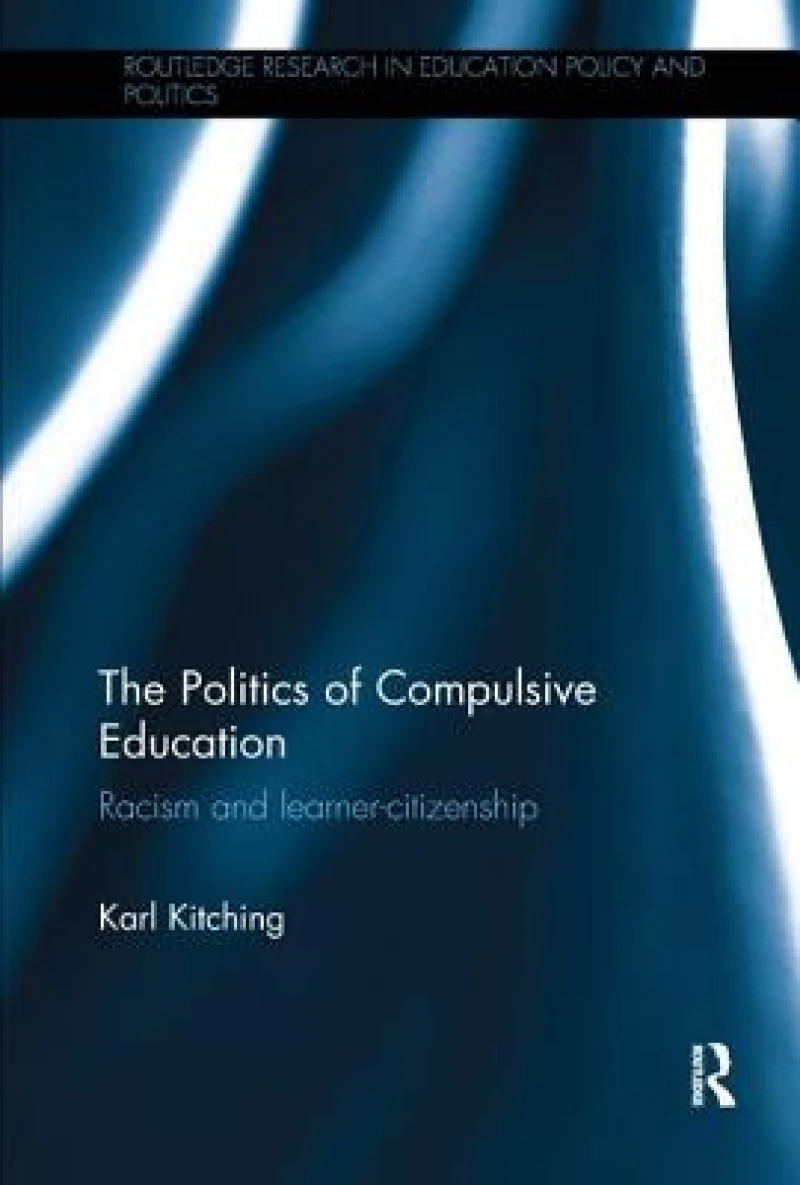
The Politics of Compulsive Education : Racism and learner-citizenship
Book Details
AI Summary
Delivery Location
Delivery fee: Select location
Using a variety of qualitative studies and analytic approaches, The Politics of Compulsive Education details the significance of mass education(s) to the ongoing racialisation of national sovereignty. It draws on in-depth historical, policy, media and school-based research, moving from the 19th century to the present day. Chapters explore diverse themes such as student deportation, austerity and the politics of community ‘integration’, the depoliticisation of third level education via international student and ‘quality’ teacher regimes, the racialised distribution of learner ‘ability’, and school-based bullying and harassment. Combined, these studies demonstrate the possibilities and constraints that exist for educational anti-racisms both in terms of social movements and everyday classroom situations.
The marketised and securitised shaping of formal education sites in terms of risk prevention strategies have transformed what it means to be a learner and a citizen. In this book, Karl Kitching explores racialised dimensions to suggest how individuals and collectives are increasingly made responsible for their own welfare as ‘good’ or ‘bad’ students, at the expense of the protection of their rights as learner-citizens. Focusing on Ireland as a post-colonial Atlantic state, the book demonstrates how liberal governance, racisms, migration and mass education are interconnected and struggled over at local, national, European and global levels.
Using a variety of qualitative studies and analytic approaches, The Politics of Compulsive Education details the significance of mass education(s) to the ongoing racialisation of national sovereignty. It draws on in-depth historical, policy, media and school-based research, moving from the 19th century to the present day. Chapters explore diverse themes such as student deportation, austerity and the politics of community ‘integration’, the depoliticisation of third level education via international student and ‘quality’ teacher regimes, the racialised distribution of learner ‘ability’, and school-based bullying and harassment. Combined, these studies demonstrate the possibilities and constraints that exist for educational anti-racisms both in terms of social movements and everyday classroom situations.
The Politics of Compulsive Education asks key questions about anti-racist responsibility across multiple education sites and explores how racisms are both shaped, and can be interrupted, by the interaction of the global and the local, as seen in terms of migration, the distribution of capital, media, education policy discourse, and teacher and learner identifications. It will be of interest to researchers, academics and postgraduate students of sociology, education, cultural studies, political theory, philosophy and postcolonial studies.
Get The Politics of Compulsive Education by at the best price and quality guaranteed only at Werezi Africa's largest book ecommerce store. The book was published by Taylor & Francis Ltd and it has pages.
Discover books you might love based on this title.
More in This Genre

Reaching the Unseen Children
Ksh 27,900.00
Inclusive Texts in Elementary Classrooms
Ksh 15,100.00

Belonging in Higher Education
Ksh 27,900.00
Conflict Resolution and Peace Education
Ksh 8,100.00
The Mexican American Community College Experience
Ksh 9,900.00
Handbook of Multicultural School Psychology
Ksh 23,400.00
