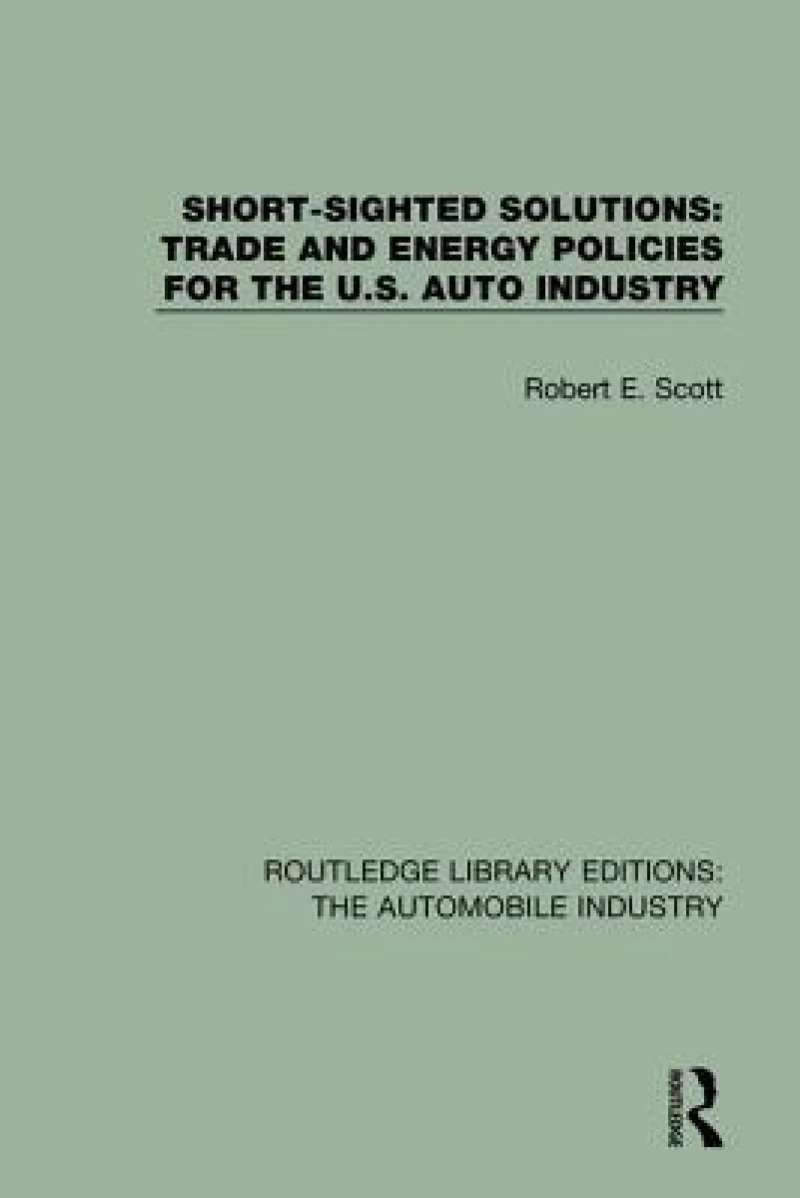
Short Sighted Solutions: Trade and Energy Policies for the US Auto Industry
Book Details
AI Summary
Delivery Location
Delivery fee: Select location
This book, originally published in 1994, explores the effects of federal policies on the US auto industry in the 1970s and 80s which were designed to save jobs and help the domestic industry become more competitive. The author develops a new model based on modern oliopoly theory to estimate the effects of the voluntary Restraint Agreements (which limited Japanese imports) on the US auto market. The results demonstrate that VRAs caused price increases which adversely affected the comptitiveness of US producers. On the eve of a new Trump administration, and the likelihood of new restrictions on imports to boost US manufacturing, this book has particular enduring relevance.
This book, originally published in 1994, explores the effects of federal policies on the US auto industry in the 1970s and 80s which were designed to save jobs and help the domestic industry become more competitive. The author develops a new model based on modern oliopoly theory to estimate the effects of the voluntary Restraint Agreements (which limited Japanese imports) on the US auto market. The results demonstrate that VRAs caused price increases which adversely affected the comptitiveness of US producers. On the eve of a new Trump administration, and the likelihood of new restrictions on imports to boost US manufacturing, this book has particular enduring relevance.
Get Short Sighted Solutions: Trade and Energy Policies for the US Auto Industry by at the best price and quality guaranteed only at Werezi Africa's largest book ecommerce store. The book was published by Taylor & Francis Ltd and it has pages.
Discover books you might love based on this title.