
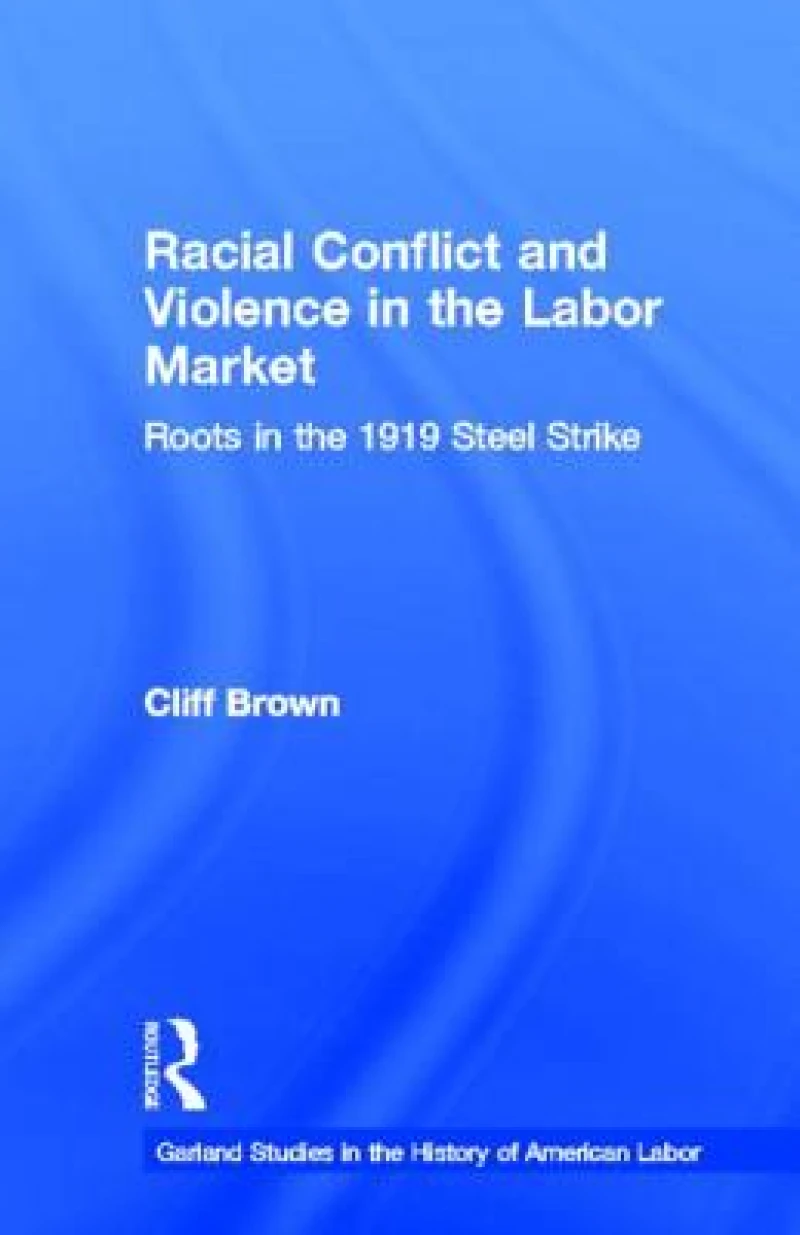
Racial Conflicts and Violence in the Labor Market : Roots in the 1919 Steel Strike
by
Cliff Brown
Book Details
Format
Hardback or Cased Book
Book Series
Garland Studies in the History of American Labor
ISBN-10
0815331762
ISBN-13
9780815331766
Publisher
Taylor & Francis Inc
Imprint
Routledge
Country of Manufacture
GB
Country of Publication
GB
Publication Date
Sep 1st, 1998
Print length
238 Pages
Weight
440 grams
Product Classification:
History
AI Summary
Ksh 28,800.00
Werezi Extended Catalogue
0 in stock
Delivery Location
Delivery fee: Select location
Secure
Quality
Fast
This book focuses on community-level race relations during the 1919 Steel Strike, when intense job competition contributed to racial conflict among the nation's steel workers. As the Great Migration brought thousands of black workers to northern cities, their lower labor costs generated racially split labor markets in the industrial sector. Further, the discriminatory policies of labor unions forced many blacks to serve as strike breakers during periods of class conflict. As a result, the migration heightened racial conflict and undercut important union organizing initiatives. The 1919 Steel Strike illustrates how racial divisions crippled many American unions, a pattern that helps to explain the demise of organized labor during the 1920's. No previous studies of the 1919 Steel Strike have systematically compared community processes to determine how local events shaped the strike's outcome. Despite the failure of the 1919 Steel Strike, the varied experiences of workers in different communities reveal much about the causes of racial conflict and the possibilities of interracial solidarity. This study finds that patterns of black migration, local government repression of labor, the organizational strength of local unions, and employers' efforts to inflame racial tension all help to explain community-level variation in interracial solidarity and conflict. (Ph. D. dissertation, Emory University, 1996; revised with new preface)
This book focuses on community-level race relations during the 1919 Steel Strike, when intense job competition contributed to racial conflict among the nation''s steel workers. As the Great Migration brought thousands of black workers to northern cities, their lower labor costs generated racially split labor markets in the industrial sector. Further, the discriminatory policies of labor unions forced many blacks to serve as strike breakers during periods of class conflict. As a result, the migration heightened racial conflict and undercut important union organizing initiatives. The 1919 Steel Strike illustrates how racial divisions crippled many American unions, a pattern that helps to explain the demise of organized labor during the 1920''s. No previous studies of the 1919 Steel Strike have systematically compared community processes to determine how local events shaped the strike''s outcome. Despite the failure of the 1919 Steel Strike, the varied experiences of workers in different communities reveal much about the causes of racial conflict and the possibilities of interracial solidarity. This study finds that patterns of black migration, local government repression of labor, the organizational strength of local unions, and employers'' efforts to inflame racial tension all help to explain community-level variation in interracial solidarity and conflict. (Ph. D. dissertation, Emory University, 1996; revised with new preface)
Get Racial Conflicts and Violence in the Labor Market by at the best price and quality guaranteed only at Werezi Africa's largest book ecommerce store. The book was published by Taylor & Francis Inc and it has pages.
Discover books you might love based on this title.
More in This Genre
Class, Caste and Color
Ksh 17,450.00

Anglo-Russian Rivalry in Central Asia 1810-1895
Ksh 9,000.00
Breaking Rockefeller
Ksh 3,250.00

Green Lands for White Men
Ksh 16,550.00

Nationalism And Policy Toward The Nationalities In The Soviet Union
Ksh 27,900.00

Automobile Troubles and How to Remedy Them
Ksh 2,700.00
