
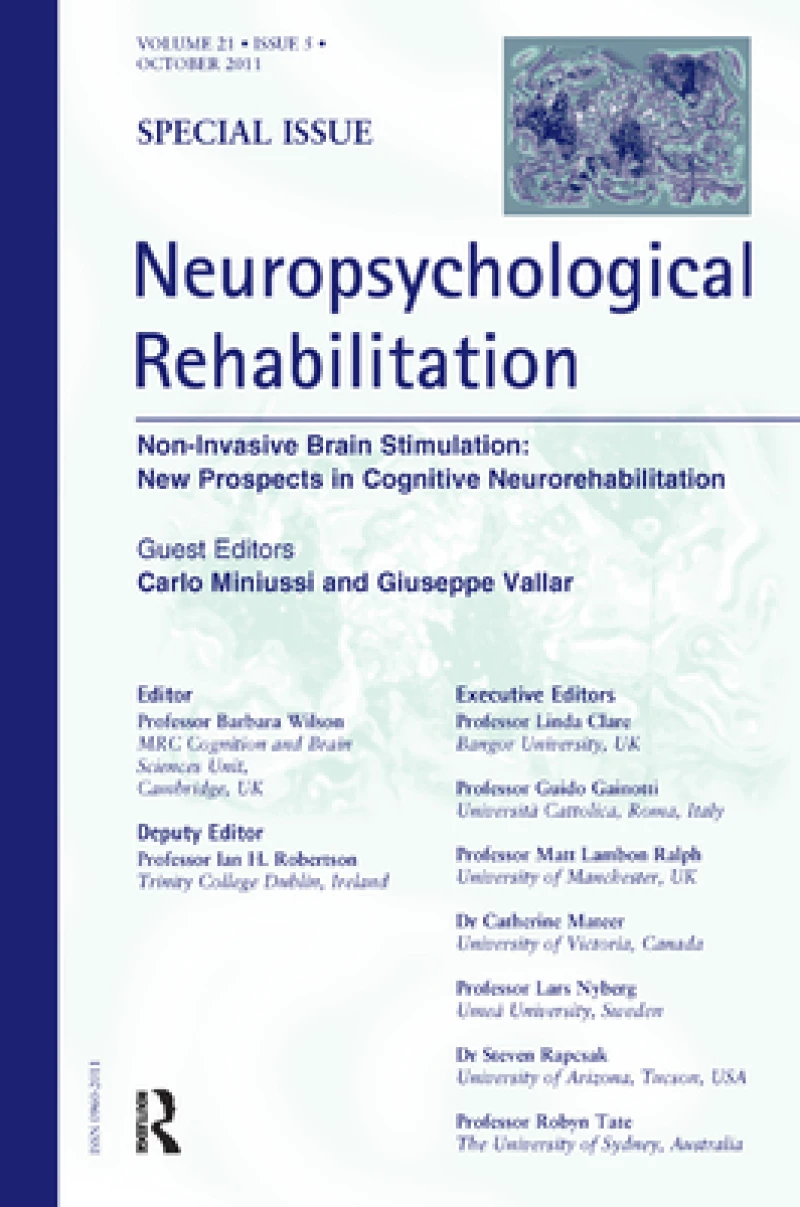
Non-Invasive Brain Stimulation: New Prospects in Cognitive Neurorehabilitation
Book Details
AI Summary
Delivery Location
Delivery fee: Select location
This Special Issues includes state-of-the art reviews, written by research leaders, of Non-Invasive Brain-Stimulation (NIBS) techniques for the cognitive rehabilitation of disorders of memory, language, perception, attention and executive functions. Enhancing cognitive functions and the effects of concurrent cognitive rehabilitation through NIBS is a promising field for translational and clinical research. Transcranial Magnetic Stimulation (TMS), and transcranial Electrical Stimulation (tES), modulate behaviour through effects on neural excitability, and plasticity. tES is a low-cost and safe method, that can be used in a variety of conditions, both in the hospital and home-based. The Special Issue is a highly recommended reading for neurologists and psychologists.
Cognitive deficits are a common consequence of neurological disease, and there is evidence that specific cognitive training may be effective in rehabilitation. Behavioural dysfunction following neurological disease constitutes one of the major causes of disability worldwide, exerts a major impact on the daily life of affected individuals, and their families, also with a financial burden both for patients, and the society in general. Therefore, the adequate treatment of cognitive dysfunction is a much relevant issue, with social and economical implications, over and above the neuropsychological problem per se.
Several investigations emphasise the fact that interacting with neural activity, by means of cortical stimulation, can affect cognitive performance. A number of studies have reported enhanced performance in specific cognitive tasks in patients with several types of neurological disease, after receiving Non Invasive Brain Stimulation (NIBS) to specific cortical areas, namely: Transcranial Magnetic Stimulation, and transcranial Electrical Stimulation. In general, the evidence highlights the possibility of inducing changes in cortical excitability, which, in turn, may lead to a plastic reorganization of dysfunctional networks, responsible for the impaired cognitive functions. Despite these advances, a number of important questions remain open, regarding the use of stimulation techniques in cognitive rehabilitation.
This special issue puts together international leading experts in the field, to review and discuss recent advances as to whether NIBS techniques alone, or combined with behavioural cognitive rehabilitation, can lead to performance enhancements, and why. The issue is timely and promises to have a huge impact across many domains of clinical and basic neuroscience.
Get Non-Invasive Brain Stimulation: New Prospects in Cognitive Neurorehabilitation by at the best price and quality guaranteed only at Werezi Africa's largest book ecommerce store. The book was published by Taylor & Francis Ltd and it has pages.
Discover books you might love based on this title.
More in This Genre
The Mind-Brain Relationship
Ksh 26,100.00
Neuropsychology and the Hispanic Patient
Ksh 8,000.00
Mild Traumatic Brain Injury and Postconcussion Syndrome
Ksh 11,900.00
The Psychology of Set / Eksperimental‘Nye Osnovy Psikhologii Ustanovki / ????????????????? ?????? ?????????? ?????????
Ksh 8,100.00
Addressing Brain Injury in Under-Resourced Settings
Ksh 25,200.00

Cognitive Neuroscience
Ksh 12,700.00
