
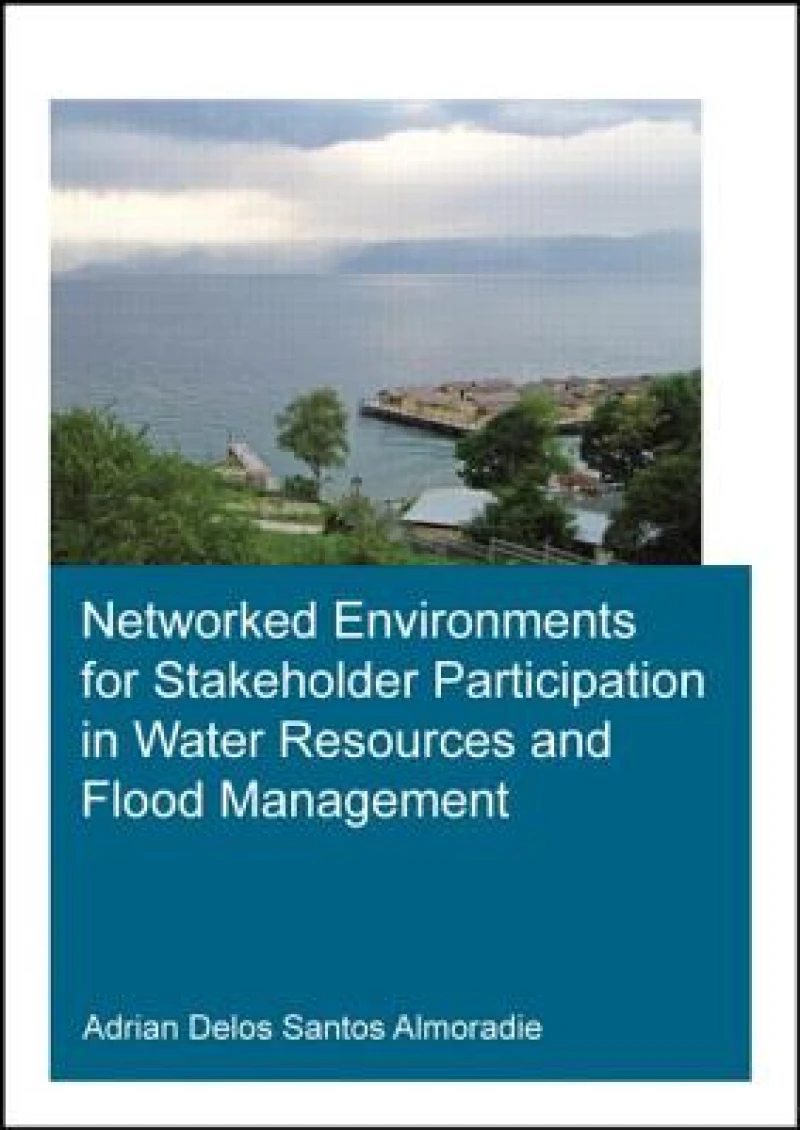
Networked Environments for Stakeholder Participation in Water Resources and Flood Management
Book Details
AI Summary
Delivery Location
Delivery fee: Select location
Stakeholders’ lack of awareness, involvement and participation in the planning and management of water resources and flood risk often creates problems in the acceptance and implementation of proposed measures. Interactions among stakeholders and decision makers build awareness, trust, enhance cooperation and negotiation for best possible measures.
The main challenge in stakeholder participation is maintaining the participatory process. Stakeholders’ spatial distribution, limitation of financial resources and diverse stakeholders’ interest (even opposed) are some of the hindrances in maintaining the participatory process.
Addressing these challenges and hindrances, this research developed and implemented three frameworks for developing "Networked Environments for Stakeholder Participation" (NESPs). Networked environments are web-based computer-aided or mobile environments for remote virtual interaction between participating entities such as stakeholders. NESPs are envisioned to enable stakeholder participation by providing sharing of information, planning, negotiating and decision support. NESPs were implemented in five real case studies (1) Lakes of Noord-Brabant, The Netherlands, (2) Danube river (Braila-Isaccea section), Romania, (3) Somes Mare catchment, Romania, (4) Cranbrook catchment, London and (5) Alster catchment, Hamburg, Germany.
The overall results of the research show that networked environments can address the challenges and hindrances in stakeholder participation and enhance participation in water resources and flood management.
Stakeholders’ lack of awareness, involvement and participation in the planning and management of water resources and flood risk often creates problems in the acceptance and implementation of proposed measures. Interactions among stakeholders and decision makers build awareness, trust, enhance cooperation and negotiation for best possible measures.
The main challenge in stakeholder participation is maintaining the participatory process. Stakeholders’ spatial distribution, limitation of financial resources and diverse stakeholders’ interest (even opposed) are some of the hindrances in maintaining the participatory process.
Addressing these challenges and hindrances, this research developed and implemented three frameworks for developing "Networked Environments for Stakeholder Participation" (NESPs). Networked environments are web-based computer-aided or mobile environments for remote virtual interaction between participating entities such as stakeholders. NESPs are envisioned to enable stakeholder participation by providing sharing of information, planning, negotiating and decision support. NESPs were implemented in five real case studies (1) Lakes of Noord-Brabant, The Netherlands, (2) Danube river (Braila-Isaccea section), Romania, (3) Somes Mare catchment, Romania, (4) Cranbrook catchment, London and (5) Alster catchment, Hamburg, Germany.
The overall results of the research show that networked environments can address the challenges and hindrances in stakeholder participation and enhance participation in water resources and flood management.
Get Networked Environments for Stakeholder Participation in Water Resources and Flood Management by at the best price and quality guaranteed only at Werezi Africa's largest book ecommerce store. The book was published by Taylor & Francis Ltd and it has pages.
Discover books you might love based on this title.
More in This Genre

Riversymposium 2002
Ksh 8,300.00

Water Supply Systems
Ksh 22,300.00

Membrane Technology in Water Treatment in the Mediterranean Region
Ksh 26,100.00

Strategic Management of Flood Risk
Ksh 15,550.00

Adsorptive Removal of Manganese, Arsenic and Iron from Groundwater
Ksh 10,450.00
America's Water and Wastewater Crisis
Ksh 4,600.00
