
Nanoporous Materials: Science And Engineering
Book Details
Format
Paperback / Softback
Book Series
Series On Chemical Engineering
ISBN-10
1860942113
ISBN-13
9781860942112
Publisher
Imperial College Press
Imprint
Imperial College Press
Country of Manufacture
GB
Country of Publication
GB
Publication Date
Nov 24th, 2004
Print length
912 Pages
Weight
1,552 grams
Dimensions
24.70 x 16.50 x 4.70 cms
Product Classification:
Physical chemistryMaterials science
AI Summary
Ksh 25,400.00
Werezi Extended Catalogue
0 in stock
Delivery Location
Delivery fee: Select location
Secure
Quality
Fast
Porous materials are of scientific and technological importance because of the presence of voids of controllable dimensions at the atomic, molecular, and nanometer scales, enabling them to discriminate and interact with molecules and clusters. Interestingly the big deal about this class of materials is about the "nothingness" within - the pore space. International Union of Pure and Applied Chemistry (IUPAC) classifies porous materials into three categories - micropores of less than 2 nm in diameter, mesopores between 2 and 50 nm, and macropores of greater than 50 nm. In this book, nanoporous materials are defined as those porous materials with pore diameters less than 100 nm.Over the last decade, there has been an ever increasing interest and research effort in the synthesis, characterization, functionalization, molecular modeling and design of nanoporous materials. The main challenges in research include the fundamental understanding of structure-property relations and tailor-design of nanostructures for specific properties and applications. Research efforts in this field have been driven by the rapid growing emerging applications such as biosensor, drug delivery, gas separation, energy storage and fuel cell technology, nanocatalysis and photonics. These applications offer exciting new opportunities for scientists to develop new strategies and techniques for the synthesis and applications of these materials.This book provides a series of systematic reviews of the recent developments in nanoporous materials. It covers the following topics: (1) synthesis, processing, characterization and property evaluation; (2) functionalization by physical and/or chemical treatments; (3) experimental and computational studies on fundamental properties, such as catalytic effects, transport and adsorption, molecular sieving and biosorption; (4) applications, including photonic devices, catalysis, environmental pollution control, biological molecules separation and isolation, sensors, membranes, hydrogen and energy storage, etc.
Porous materials are of scientific and technological importance because of the presence of voids of controllable dimensions at the atomic, molecular, and nanometer scales, enabling them to discriminate and interact with molecules and clusters. Interestingly the big deal about this class of materials is about the “nothingness” within — the pore space. International Union of Pure and Applied Chemistry (IUPAC) classifies porous materials into three categories — micropores of less than 2 nm in diameter, mesopores between 2 and 50 nm, and macropores of greater than 50 nm. In this book, nanoporous materials are defined as those porous materials with pore diameters less than 100 nm.Over the last decade, there has been an ever increasing interest and research effort in the synthesis, characterization, functionalization, molecular modeling and design of nanoporous materials. The main challenges in research include the fundamental understanding of structure-property relations and tailor-design of nanostructures for specific properties and applications. Research efforts in this field have been driven by the rapid growing emerging applications such as biosensor, drug delivery, gas separation, energy storage and fuel cell technology, nanocatalysis and photonics. These applications offer exciting new opportunities for scientists to develop new strategies and techniques for the synthesis and applications of these materials.This book provides a series of systematic reviews of the recent developments in nanoporous materials. It covers the following topics: (1) synthesis, processing, characterization and property evaluation; (2) functionalization by physical and/or chemical treatments; (3) experimental and computational studies on fundamental properties, such as catalytic effects, transport and adsorption, molecular sieving and biosorption; (4) applications, including photonic devices, catalysis, environmental pollution control, biological molecules separation and isolation, sensors, membranes, hydrogen and energy storage, etc.
Get Nanoporous Materials: Science And Engineering by at the best price and quality guaranteed only at Werezi Africa's largest book ecommerce store. The book was published by Imperial College Press and it has pages.
Discover books you might love based on this title.
More in This Genre
Materials Processing In Magnetic Fields - Proceedings Of The International Workshop On Materials Analysis And Processing In Magnetic Fields
Ksh 31,500.00
Molecular Characterization of Polymers
Ksh 35,100.00

Historic Mortars
Ksh 23,400.00

Optical Properties of Wood
Ksh 14,400.00
All-carbon Composites and Hybrids
Ksh 30,400.00
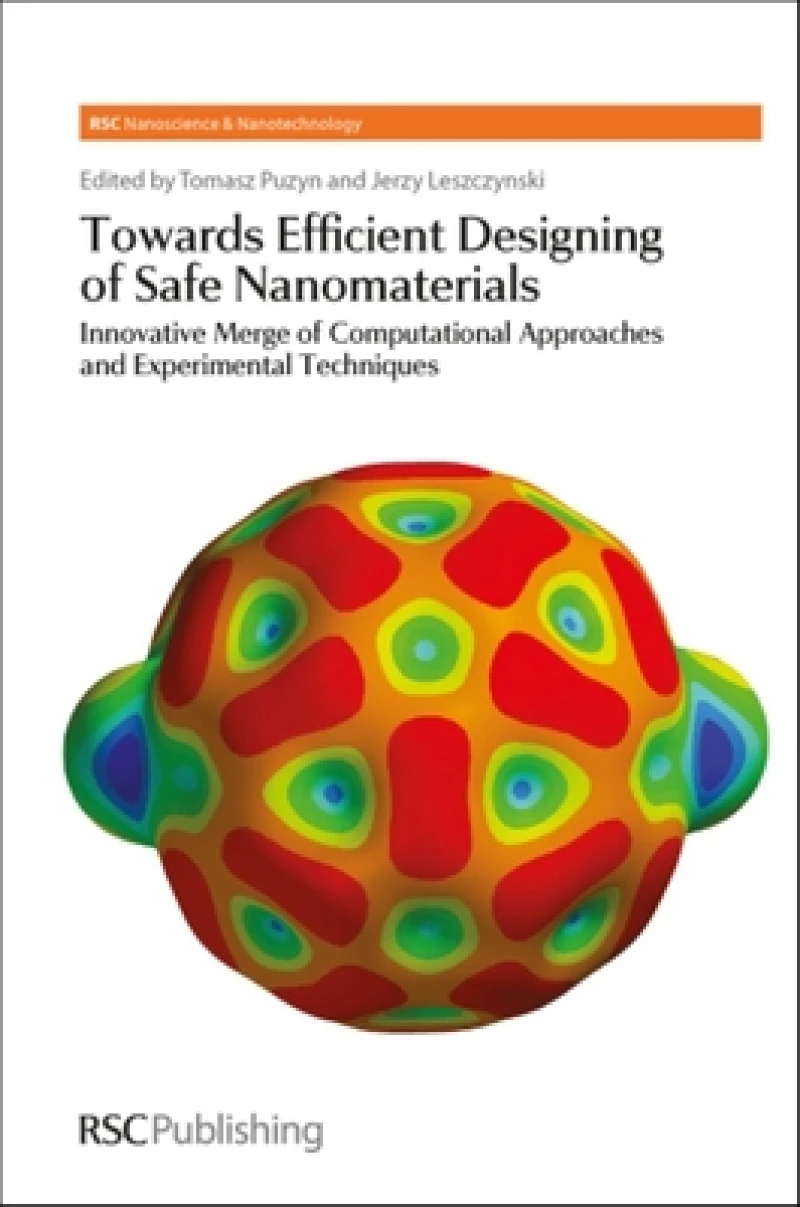
Towards Efficient Designing of Safe Nanomaterials
Ksh 27,700.00
