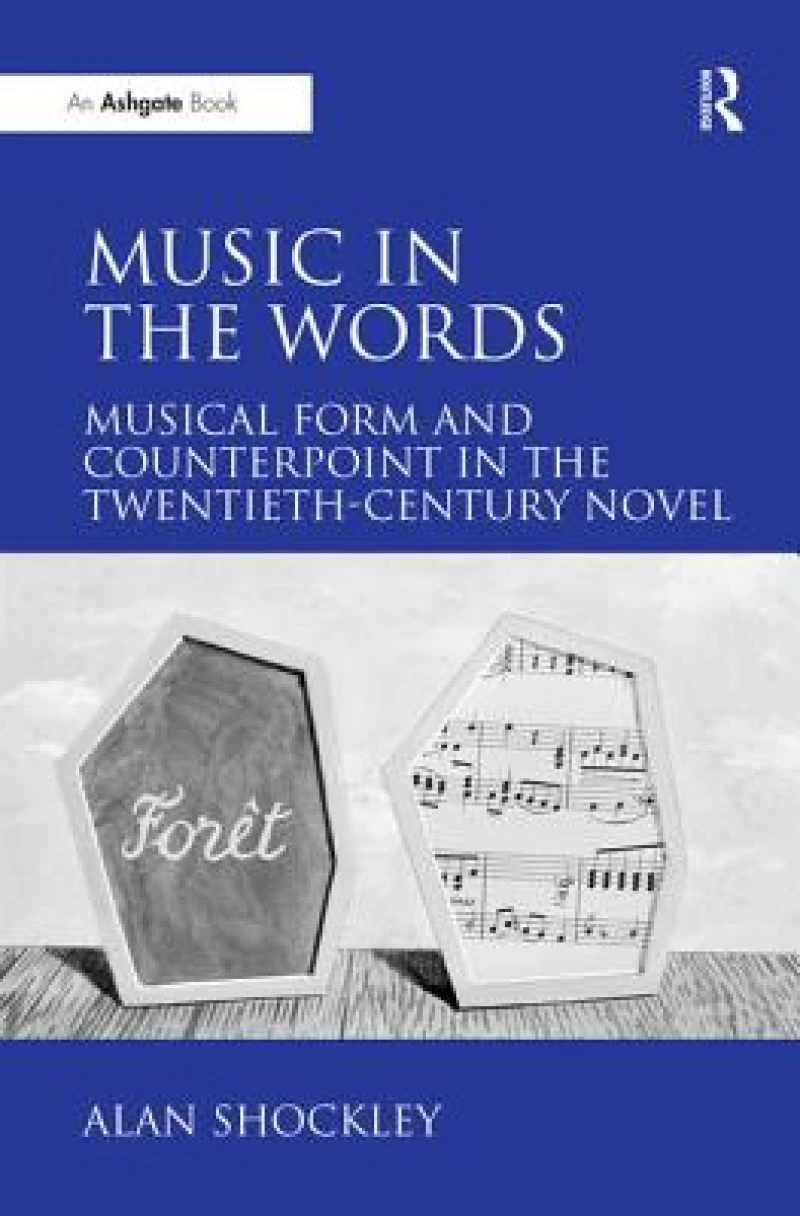
Music in the Words: Musical Form and Counterpoint in the Twentieth-Century Novel
Book Details
Format
Hardback or Cased Book
ISBN-10
0754661997
ISBN-13
9780754661993
Publisher
Taylor & Francis Ltd
Imprint
Routledge
Country of Manufacture
GB
Country of Publication
GB
Publication Date
May 28th, 2009
Print length
206 Pages
Weight
453 grams
AI Summary
Ksh 28,800.00
Werezi Extended Catalogue
0 in stock
Delivery Location
Delivery fee: Select location
Secure
Quality
Fast
There is a strong tradition of literary analyses of the musical artwork. Simply put, all musicology - any writing about music - is an attempt at making analogies between what happens within the world of sound and language itself. This study considers this analogy from the opposite perspective - attempting to structure words using musical forms.
There is a strong tradition of literary analyses of the musical artwork. Simply put, all musicology - any writing about music - is an attempt at making analogies between what happens within the world of sound and language itself. This study considers this analogy from the opposite perspective: authors attempting to structure words using musical forms and techniques. It''s a viewpoint much more rarely explored, and none of the extant studies of novelists'' musical techniques have been done by musicians. Can a novel follow the form of a symphony and still succeed as a novel? Can musical counterpoint be mimicked by words on a page? Alan Shockley begins looking for answers by examining music''s appeal for novelists, and then explores two brief works, a prose fugue by Douglas Hofstadter, and a short story by Anthony Burgess modeled after a Mozart symphony. Analyses of three large, emblematic attempts at musical writing follow. The much debated ''Sirens'' episode of James Joyce''s Ulysses, which the author famously likened to a fugue, Burgess'' largely ignored Napoleon Symphony: A Novel in Four Movements, patterned on Beethoven''s Eroica, and Joyce''s Finnegans Wake, which Shockley examines as an attempt at composing a fully musicalized language. After these three larger analyses, Shockley discusses two quite recent brief novels, William Gaddis'' novella Agapé Agape and David Markson''s This is not a novel, proposing that each of these confounding texts coheres elegantly when viewed as a musically-structured work. From the perspective of a composer, Shockley offers the reader fresh tools for approaching these dense and often daunting texts.
Get Music in the Words: Musical Form and Counterpoint in the Twentieth-Century Novel by at the best price and quality guaranteed only at Werezi Africa's largest book ecommerce store. The book was published by Taylor & Francis Ltd and it has pages.
Discover books you might love based on this title.