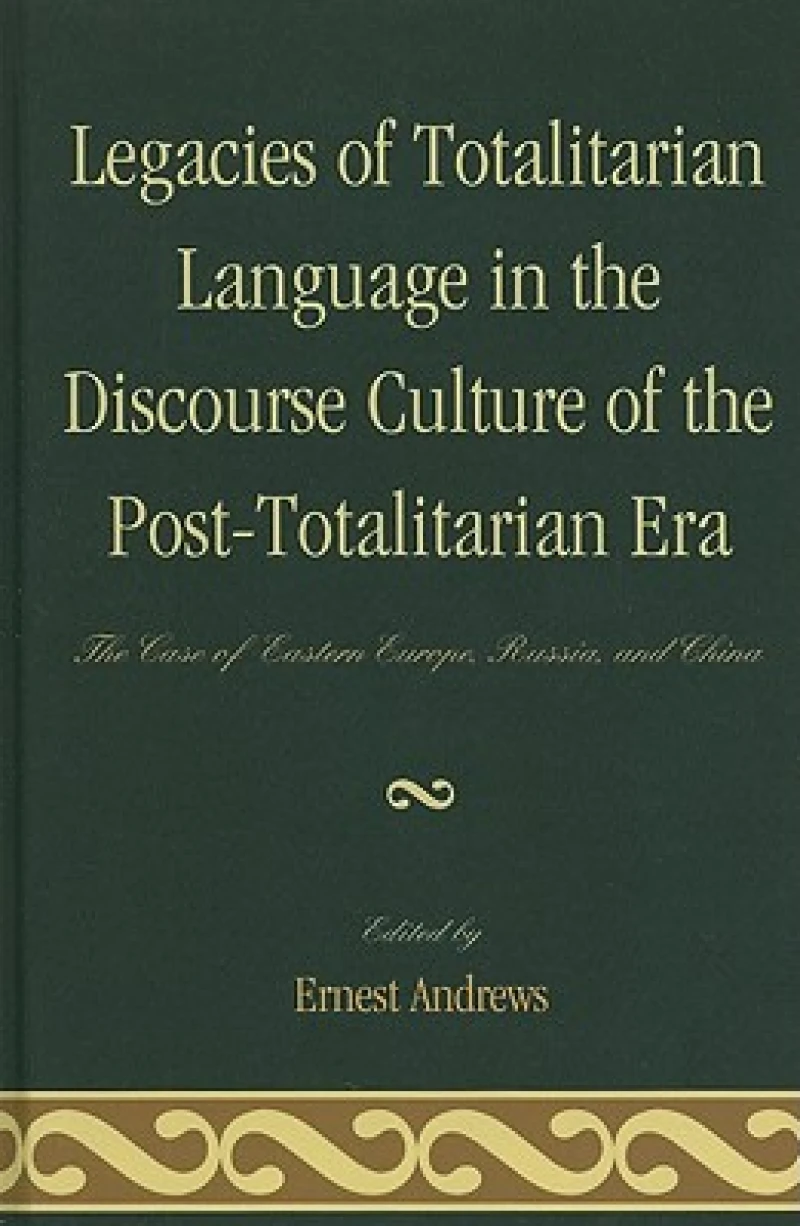
Legacies of Totalitarian Language in the Discourse Culture of the Post-Totalitarian Era : The Case of Eastern Europe, Russia, and China
Book Details
Format
Hardback or Cased Book
ISBN-10
0739164651
ISBN-13
9780739164655
Publisher
Bloomsbury Publishing Plc
Imprint
Lexington Books
Country of Manufacture
GB
Country of Publication
GB
Publication Date
May 19th, 2011
Print length
230 Pages
Weight
503 grams
Dimensions
24.00 x 16.30 x 2.00 cms
AI Summary
Ksh 19,350.00
Manufactured on Demand
0 in stock
Delivery Location
Delivery fee: Select location
Secure
Quality
Fast
This book is unique in its kind. It is the first scholarly work to attempt a comprehensive and fairly detailed look into the lingering legacies of the communist totalitarian modes of thought and expression in the new discourse forms of the post-totalitarian era. The book gives also new and interesting insights into the ways the new, presumably democratically-minded political elites in post-totalitarian Eastern Europe, Russia, and China manipulate language to serve their own political and economic agendas. The book consists of ten discrete discussions, nine case-studies or chapters and an introduction. Chapter 1 discusses patterns of continuity and change in the conceptual apparatus and linguistic habits of political science and sociology practiced in the Czech Republic before and after 1989. Chapter 2 analyzes lingering effects of communist propaganda language in the political discourse and behavior in post-communist Poland. Chapter 3 analyzes the legacy of Soviet semantics in post-Soviet Moldovan politics through the prism of such politically contested words as "democracy," "democratization," and "people." Chapters 4 and 5 discuss the way in which communist patterns of thought and expression manifest themselves in the new political discourse in Romania and Bulgaria, respectively. Chapter 6 examines phenomena of change and continuity in the socio-linguistic and socio-political scene of post-Soviet Latvia. Chapter 7 analyzes the extent to which the language of the post-communist Romanian media differs from the official language of the communist era. Chapter 8 examines the evolution of Russian official discourse since the late eighties with a view of showing "whether or not new phenomena in the evolution of post-Soviet discourse represent new development or just a mutation of the value-orientations of the old Soviet ideological apparatus." Chapter 9 gives a detailed and lucid account of the evolution of both official and non-official discourse in China since the end of the Mao era.
This book is unique in its kind. It is the first scholarly work to attempt a comprehensive and fairly detailed look into the lingering legacies of the communist totalitarian modes of thought and expression in the new discourse forms of the post-totalitarian era. The book gives also new and interesting insights into the ways the new, presumably democratically-minded political elites in post-totalitarian Eastern Europe, Russia, and China manipulate language to serve their own political and economic agendas. The book consists of ten discrete discussions, nine case-studies or chapters and an introduction. Chapter 1 discusses patterns of continuity and change in the conceptual apparatus and linguistic habits of political science and sociology practiced in the Czech Republic before and after 1989. Chapter 2 analyzes lingering effects of communist propaganda language in the political discourse and behavior in post-communist Poland. Chapter 3 analyzes the legacy of Soviet semantics in post-Soviet Moldovan politics through the prism of such politically contested words as "democracy," "democratization," and "people." Chapters 4 and 5 discuss the way in which communist patterns of thought and expression manifest themselves in the new political discourse in Romania and Bulgaria, respectively. Chapter 6 examines phenomena of change and continuity in the socio-linguistic and socio-political scene of post-Soviet Latvia. Chapter 7 analyzes the extent to which the language of the post-communist Romanian media differs from the official language of the communist era. Chapter 8 examines the evolution of Russian official discourse since the late eighties with a view of showing "whether or not new phenomena in the evolution of post-Soviet discourse represent new development or just a mutation of the value-orientations of the old Soviet ideological apparatus." Chapter 9 gives a detailed and lucid account of the evolution of both official and non-official discourse in China since the end of the Mao era.
Get Legacies of Totalitarian Language in the Discourse Culture of the Post-Totalitarian Era by at the best price and quality guaranteed only at Werezi Africa's largest book ecommerce store. The book was published by Bloomsbury Publishing Plc and it has pages.
Discover books you might love based on this title.