Cart 0
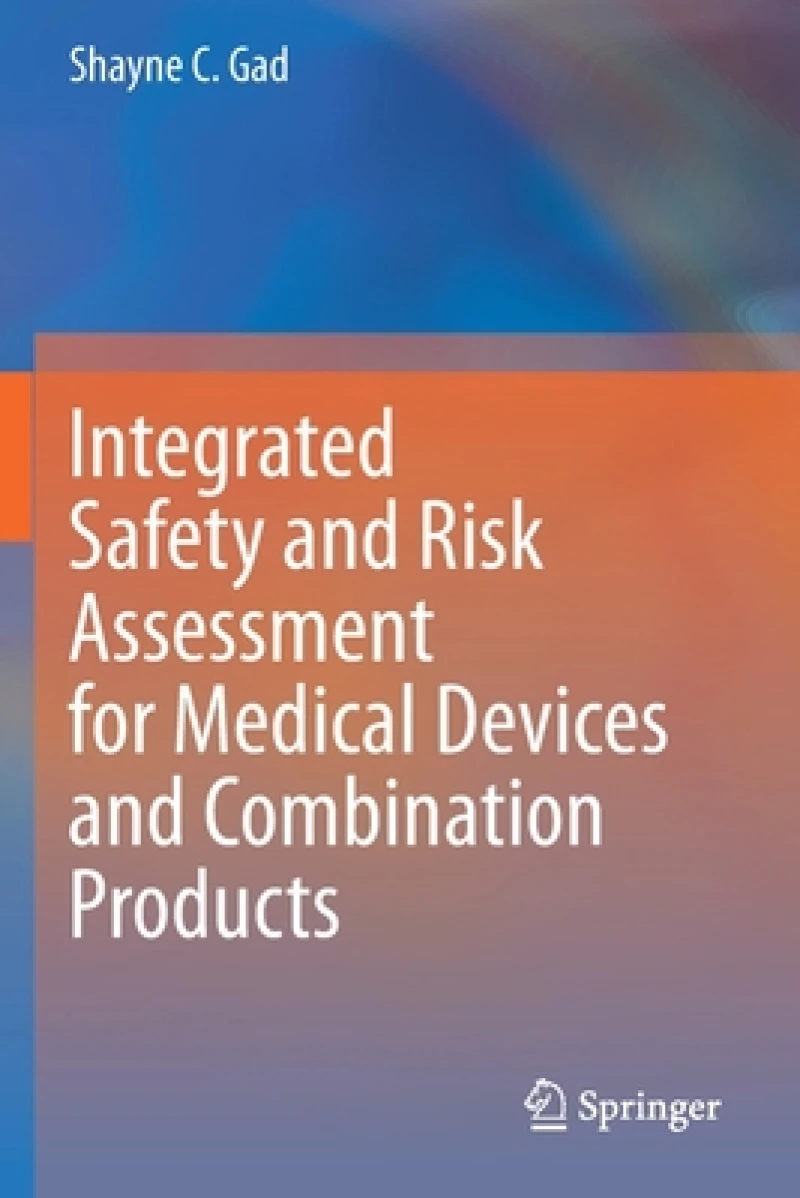
Integrated Safety and Risk Assessment for Medical Devices and Combination Products
Click to zoom

Share this book

Integrated Safety and Risk Assessment for Medical Devices and Combination Products

2019 ed.

Book Details

Format Paperback / Softback
ISBN-10 3030352439
ISBN-13 9783030352431
Edition 2019 ed.
Publisher Springer Nature Switzerland AG
Imprint Springer Nature Switzerland AG
Country of Manufacture GB
Country of Publication GB
Publication Date Feb 25th, 2021
Print length 490 Pages
Product Classification: Pharmacology
Ksh 27,000.00
Werezi Extended Catalogue 0 in stock

Delivery Location

Delivery fee: Select location

Secure
Quality
Fast
While the safety assessment (“biocompatibility”) of medical devices has been focused on issues of local tissue tolerance (irritation, sensitization, cytotoxicity) and selected quantal effects (genotoxicity and acute lethality) since first being regulated in the late 1950s, this has changed as devices assumed a much more important role in healthcare and became more complex in both composition and in their design and operation. Add to this that devices now frequently serve as delivery systems for drugs, and that drugs may be combined with devices to improve device performance, and the problems of ensuring patient safety with devices has become significantly more complex. A part of this, requirements for ensuring safety (once based on use of previously acceptable materials – largely polymers and metals) have come to requiring determining which chemical entities are potentially released from a device into patients (and how much is released). Then an appropriate and relevant(yet also conservative) risk assessment must be performed for each identified chemical structure. The challenges inherent in meeting the current requirements are multifold, and this text seeks to identify, understand, and solve all of them. •       Identify and verify the most appropriate available data. •       As in most cases such data is for a different route of exposure, transform it for use in assessing exposure by the route of interest. •       As the duration (and rate) of exposure to moieties released from a device are most frequently different (longer) than what available data speaks to, transformation across tissue is required. •       As innate and adaptive immune responses are a central part of device/patient interaction, assessing potential risks on this basis are required. •       Incorporating assessments for special populations such as neonates. •       Use of (Q)SAR (Quantitative Structure Activity Relationships) modeling in assessments. •       Performance and presentation of integrative assessments covering all potential biologic risks. Appendices will contain summarized available biocompatibility data for commonly used device materials (polymers and metals) and safety assessments on the frequently seen moieties in extractions from devices. 

While the safety assessment ("biocompatibility") of medical devices has been focused on issues of local tissue tolerance (irritation, sensitization, cytotoxicity) and selected quantal effects (genotoxicity and acute lethality) since first being regulated in the late 1950s, this has changed as devices assumed a much more important role in healthcare and became more complex in both composition and in their design and operation.

Add to this that devices now frequently serve as delivery systems for drugs, and that drugs may be combined with devices to improve device performance, and the problems of ensuring patient safety with devices has become significantly more complex.

A part of this, requirements for ensuring safety (once based on use of previously acceptable materials - largely polymers and metals) have come to requiring determining which chemical entities are potentially released from a device into patients (and how much is released). Then an appropriate and relevant (yet also conservative) risk assessment must be performed for each identified chemical structure. The challenges inherent in meeting the current requirements are multifold, and this text seeks to identify, understand, and solve all of them.

•       Identify and verify the most appropriate available data.

•       As in most cases such data is for a different route of exposure, transform it for use in assessing exposure by the route of interest.

•       As the duration (and rate) of exposure to moieties released from a device are most frequently different (longer) than what available data speaks to, transformation across tissue is required.

•       As innate and adaptive immune responses are a central part of device/patient interaction, assessing potential risks on this basis are required.

•       Incorporating assessments for special populations such as neonates.

•       Use of (Q)SAR (Quantitative Structure Activity Relationships) modeling in assessments.

•       Performance and presentation of integrative assessments covering all potential biologic risks.

Appendices will contain summarized available biocompatibility data for commonly used device materials (polymers and metals) and safety assessments on the frequently seen moieties in extractions from devices. 


Get Integrated Safety and Risk Assessment for Medical Devices and Combination Products by at the best price and quality guaranteed only at Werezi Africa's largest book ecommerce store. The book was published by Springer Nature Switzerland AG and it has pages.

Mind, Body, & Spirit

Shopping Cart

Africa largest book store

Sub Total:
Ebooks

Digital Library
Coming Soon

Our digital collection is currently being curated to ensure the best possible reading experience on Werezi. We'll be launching our Ebooks platform shortly.