
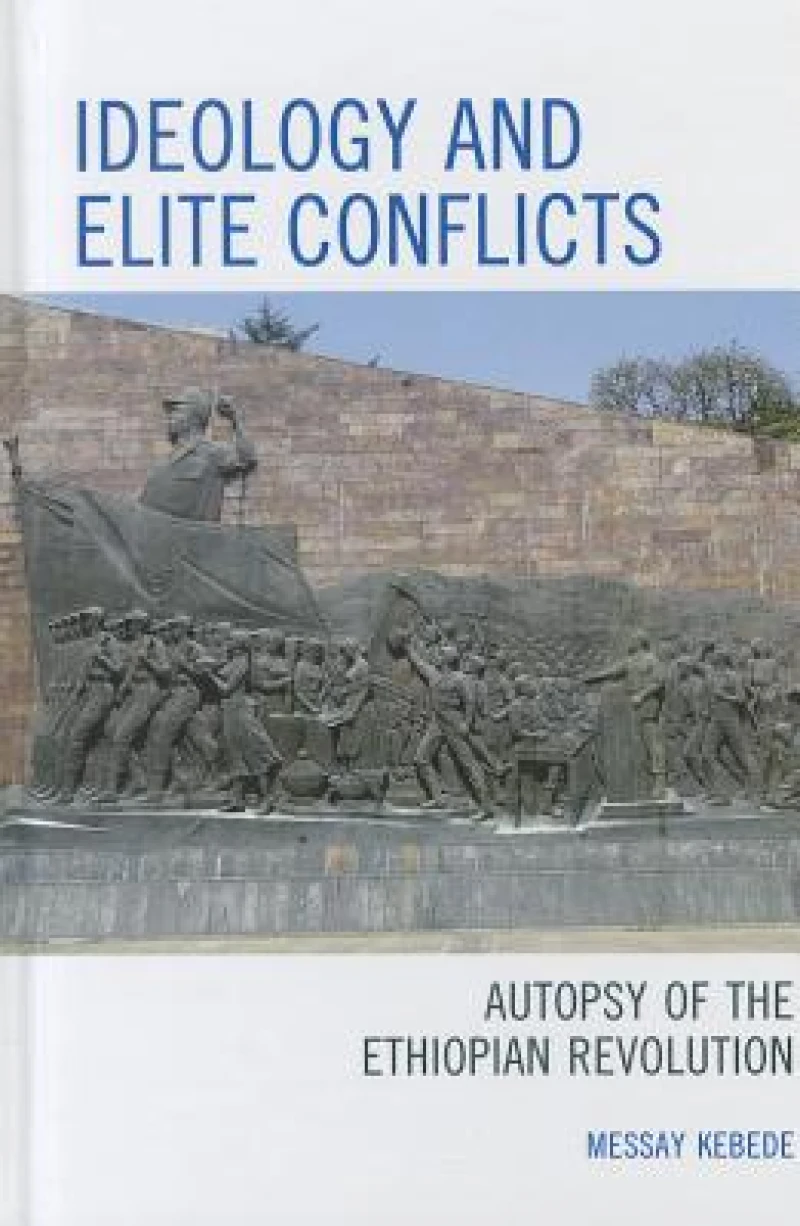
Ideology and Elite Conflicts : Autopsy of the Ethiopian Revolution
Book Details
Format
Hardback or Cased Book
ISBN-10
0739137964
ISBN-13
9780739137963
Publisher
Bloomsbury Publishing Plc
Imprint
Lexington Books
Country of Manufacture
GB
Country of Publication
GB
Publication Date
Sep 22nd, 2011
Print length
396 Pages
Weight
798 grams
Dimensions
22.90 x 16.10 x 3.70 cms
AI Summary
Ksh 25,350.00
Manufactured on Demand
0 in stock
Delivery Location
Delivery fee: Select location
Secure
Quality
Fast
The book provides a theoretical explanation of the major outcomes of Ethiopia's social revolution, namely, the overthrow of Emperor Haile Selassie in 1974 and the implementation of a far-reaching Marxist-Leninist revolution by a military committee (the Derg) and its collapse in 1991. The book extensively discusses the question of knowing whether existing theories of revolution throw light on the eruption of a radical revolution in Ethiopia and, most of all, whether they can accommodate the major anomaly of a socialist revolution being executed by a military committee that radicalized after the removal of the imperial regime. Hence the central thesis of the book: both the overthrow of the monarchical order and the radicalization of the Derg must be tied to social conditions that exasperated elite conflicts for scarce resources, with the consequence that the espousal of radical ideologies (socialism and ethnonationalism) became the sole avenue for the exclusive control of state power. Moreover, the book shows how the struggle of exclusive elites for the control of the state explains the Derg's need to put its fate in the hands of a providential leader, to wit, Mengistu Haile Mariam. In light of the theoretical debate over the role of charismatic leaders in history, the book establishes how Mengistu's narcissism led him to become the sole owner of the revolution and how his dictatorial rule brought about his own demise and that of the Derg, following the military defeat of the Ethiopian army in the hands of ethnonationalist insurgents. Another fundamental contribution of the book is a theoretical articulation of political conflicts and ideology that critically intervenes in the divisive issue of the primary cause of revolutions. Granted that ideology is more of a justification than a drive, the Ethiopian case illustrates how conflicts between mutually exclusive elites favor the path of political outbidding mobilizing utopian projects so as to galvanize the support of the masses. The perceived transcendence
The book provides a theoretical explanation of the major outcomes of Ethiopia''s social revolution, namely, the overthrow of Emperor Haile Selassie in 1974 and the implementation of a far-reaching Marxist-Leninist revolution by a military committee (the Derg) and its collapse in 1991. The book extensively discusses the question of knowing whether existing theories of revolution throw light on the eruption of a radical revolution in Ethiopia and, most of all, whether they can accommodate the major anomaly of a socialist revolution being executed by a military committee that radicalized after the removal of the imperial regime. Hence the central thesis of the book: both the overthrow of the monarchical order and the radicalization of the Derg must be tied to social conditions that exasperated elite conflicts for scarce resources, with the consequence that the espousal of radical ideologies (socialism and ethnonationalism) became the sole avenue for the exclusive control of state power. Moreover, the book shows how the struggle of exclusive elites for the control of the state explains the Derg''s need to put its fate in the hands of a providential leader, to wit, Mengistu Haile Mariam. In light of the theoretical debate over the role of charismatic leaders in history, the book establishes how Mengistu''s narcissism led him to become the sole owner of the revolution and how his dictatorial rule brought about his own demise and that of the Derg, following the military defeat of the Ethiopian army in the hands of ethnonationalist insurgents. Another fundamental contribution of the book is a theoretical articulation of political conflicts and ideology that critically intervenes in the divisive issue of the primary cause of revolutions. Granted that ideology is more of a justification than a drive, the Ethiopian case illustrates how conflicts between mutually exclusive elites favor the path of political outbidding mobilizing utopian projects so as to galvanize the support of the masses. The perceived transcendence
Get Ideology and Elite Conflicts by at the best price and quality guaranteed only at Werezi Africa's largest book ecommerce store. The book was published by Bloomsbury Publishing Plc and it has pages.
Discover books you might love based on this title.
More in This Genre

Public Perception of International Crises
Ksh 6,850.00

Western Geopolitical Thought in the Twentieth Century (Routledge Library Editions: Political Geography)
Ksh 28,550.00

The Evolution of Settlement Systems in the Region of Vohemar, Northeast Madagascar
Ksh 6,650.00

Montaigne's Politics
Ksh 9,350.00

Umerziehung und Schulpolitik in der franzoesischen Besatzungszone 1945-1949
Ksh 8,500.00

Aristotle's Quarrel with Socrates
Ksh 13,050.00
