
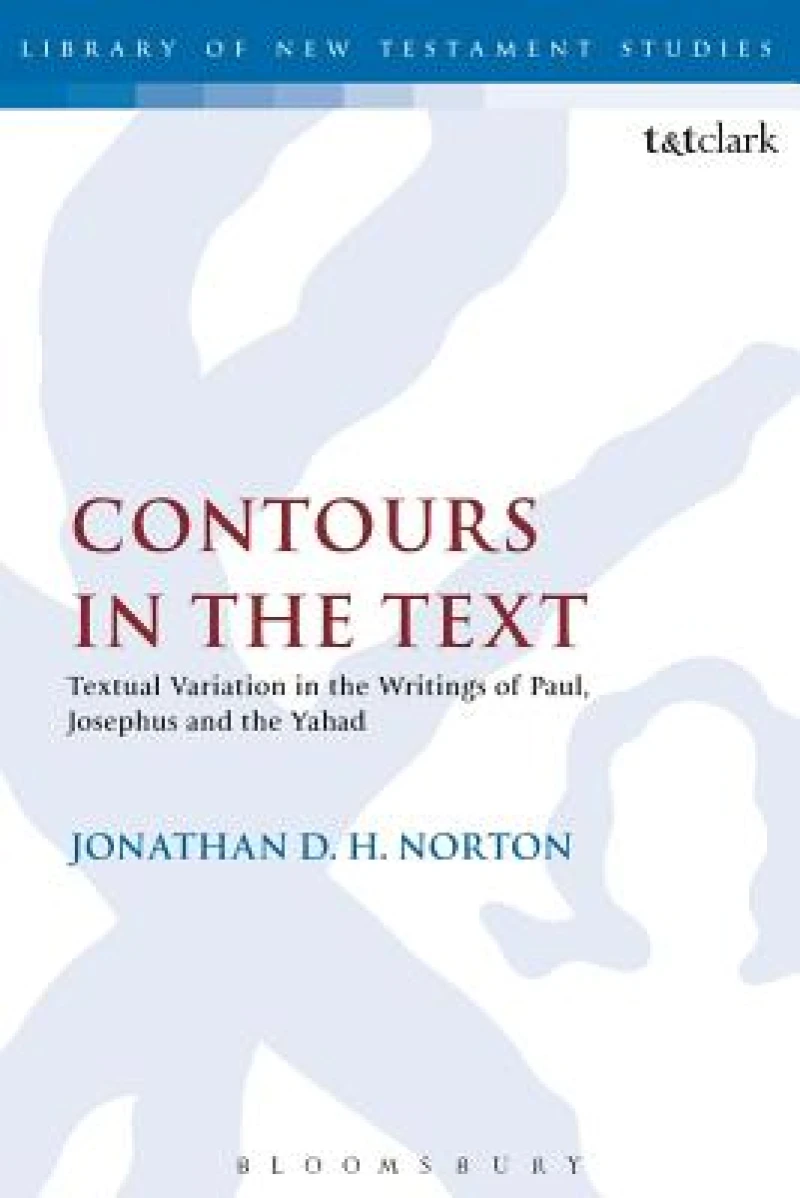
Contours in the Text : Textual Variation in the Writings of Paul, Josephus and the Yahad
Book Details
Format
Paperback / Softback
Book Series
The Library of New Testament Studies
ISBN-10
0567521990
ISBN-13
9780567521996
Publisher
Bloomsbury Publishing PLC
Imprint
T.& T.Clark Ltd
Country of Manufacture
GB
Country of Publication
GB
Publication Date
Nov 8th, 2012
Print length
224 Pages
Weight
352 grams
Dimensions
23.30 x 15.60 x 1.40 cms
Product Classification:
None
AI Summary
Ksh 7,800.00
Manufactured on Demand
0 in stock
Delivery Location
Delivery fee: Select location
Secure
Quality
Fast
Norton-Piliavsky places Paul's work within the context of ancient Jewish literary practice, bridging the gap between textual criticism and social history in contemporary discussions. The author argues that studies of ancient Jewish exegesis draw on two distinct analytical modes: the text-critical and the socio-historical. He then shows that the two are usually joined together in discussions of ancient Jewish literature arguing that as a result of this commentators often allow the text-critical approach to guide their efforts to understand historical questions. Norton argues that text-critical and historical data must be combined, but not conflated and in this volume sets out a new approach, showing that exegesis was part of an ongoing discussion, which included mutually supporting written and oral practices. Norton shows that Josephus' and Dead Sea sectarians' use of textual variation, like Paul's, belongs to this discussion demonstrating that neither Paul nor his contemporaries viewed Jewish scripture as a fixed literary monolith. Rather, they took part in a dynamic exegetical dialogue, constituted by oral as much as textual modes.
Norton-Piliavsky places Paul''s work within the context of ancient Jewish literary practice, bridging the gap between textual criticism and social history in contemporary discussions.
The author argues that studies of ancient Jewish exegesis draw on two distinct analytical modes: the text-critical and the socio-historical. He then shows that the two are usually joined together in discussions of ancient Jewish literature arguing that as a result of this commentators often allow the text-critical approach to guide their efforts to understand historical questions. Norton argues that text-critical and historical data must be combined, but not conflated and in this volume sets out a new approach, showing that exegesis was part of an ongoing discussion, which included mutually supporting written and oral practices. Norton shows that Josephus'' and Dead Sea sectarians'' use of textual variation, like Paul''s, belongs to this discussion demonstrating that neither Paul nor his contemporaries viewed Jewish scripture as a fixed literary monolith. Rather, they took part in a dynamic exegetical dialogue, constituted by oral as much as textual modes.
The author argues that studies of ancient Jewish exegesis draw on two distinct analytical modes: the text-critical and the socio-historical. He then shows that the two are usually joined together in discussions of ancient Jewish literature arguing that as a result of this commentators often allow the text-critical approach to guide their efforts to understand historical questions. Norton argues that text-critical and historical data must be combined, but not conflated and in this volume sets out a new approach, showing that exegesis was part of an ongoing discussion, which included mutually supporting written and oral practices. Norton shows that Josephus'' and Dead Sea sectarians'' use of textual variation, like Paul''s, belongs to this discussion demonstrating that neither Paul nor his contemporaries viewed Jewish scripture as a fixed literary monolith. Rather, they took part in a dynamic exegetical dialogue, constituted by oral as much as textual modes.
Get Contours in the Text by at the best price and quality guaranteed only at Werezi Africa's largest book ecommerce store. The book was published by Bloomsbury Publishing PLC and it has pages.
Discover books you might love based on this title.
More in This Genre
The Promised One
Ksh 2,500.00

Rape Culture in the House of David
Ksh 9,900.00
The Cross in Context – Reconsidering Biblical Metaphors for Atonement
Ksh 3,800.00

My First Pop-Up Fairy Tales - Three Little Pigs
Ksh 1,250.00
Reading Bibles, Writing Bodies
Ksh 8,500.00
Paul, Jerusalem and the Judaisers
Ksh 13,700.00
